Remote Sensing Technology in Forest Carbon Markets
2025/10/01
Remote Sensing Technology in Forest Carbon Markets
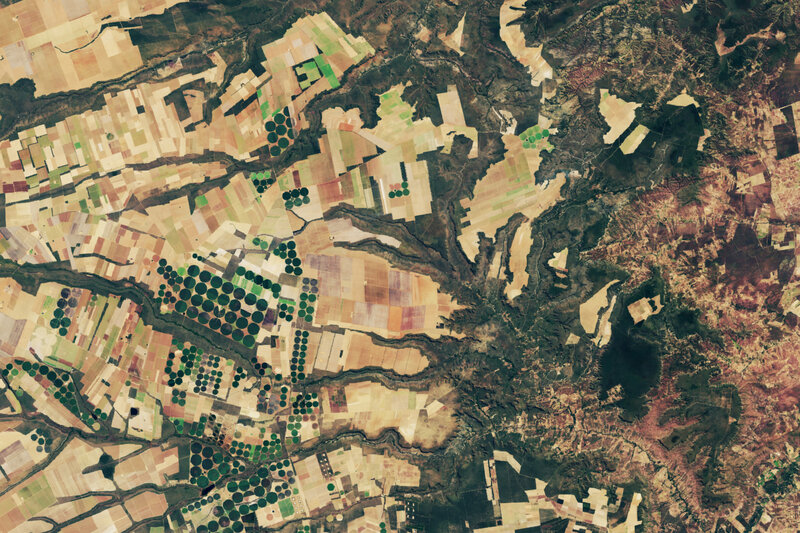
Remote sensing technology has fundamentally transformed how we measure and verify forest carbon stocks. The integration of LiDAR (Light Detection and Ranging) and satellite imagery into carbon accounting protocols enables more accurate, cost-effective, and scalable forest inventory approaches compared to traditional ground-based methods alone.
Evolution of Forest Measurement Technology
Traditional Field Inventory
Conventional forest inventory relies on:
- Plot-based sampling with statistical extrapolation
- Manual tree measurements (diameter, height)
- Labor-intensive field campaigns
- Limited spatial coverage and temporal frequency
Modern Remote Sensing Approaches
Advanced technologies now enable:
- Wall-to-wall coverage using airborne LiDAR
- Frequent monitoring with satellite imagery
- Machine learning models for species classification
- Integration of multiple data sources for comprehensive assessment
LiDAR Applications in Forest Carbon
Airborne Laser Scanning
LiDAR technology provides three-dimensional structural data on forests:
- Individual tree detection: Algorithms identify and delineate tree crowns from point clouds
- Height measurement: Precise canopy height models at sub-meter resolution
- Biomass estimation: Structure-based models predict aboveground carbon stocks
- Change detection: Repeated surveys quantify growth and disturbance
Regulatory Acceptance
In 2015, the Verified Carbon Standard approved a methodology for measuring forest biomass using remote sensing, enabling LiDAR-based inventory for carbon offset verification. This represented a major milestone in mainstreaming remote sensing for carbon markets.
Satellite Remote Sensing Integration
Multi-Temporal Monitoring
Satellite platforms provide:
- Sentinel-2: 10-meter resolution optical imagery every 5 days
- Landsat: 30-meter resolution with 50+ year archive for historical analysis
- Planet: Daily 3-meter imagery for near-real-time monitoring
- SAR: Radar data for cloud-penetrating forest structure assessment
Machine Learning Applications
Modern analytical approaches combine:
- Random forest and neural network models for biomass prediction
- Time-series analysis for growth monitoring
- Change detection algorithms for disturbance identification
- Cloud-based processing for scalable analysis
Implementation Considerations
Quality Assurance
Robust remote sensing applications require:
- Ground-based validation plots for model calibration
- Statistical uncertainty assessment
- Transparent methodology documentation
- Independent field verification
Cost-Benefit Analysis
Remote sensing economics depend on:
- Project scale (larger areas favor remote sensing)
- Monitoring frequency requirements
- Accuracy specifications
- Available reference data
Technical Expertise
Successful implementation demands:
- Geospatial data processing skills
- Statistical modeling expertise
- Understanding of forest biometrics
- Knowledge of carbon accounting protocols
Future Directions
Emerging technologies continue advancing forest carbon measurement:
- Spaceborne LiDAR: GEDI and ICESat-2 provide global forest structure data
- Hyperspectral imaging: Species-level classification and health assessment
- Drone technology: Ultra-high resolution data for localized analysis
- AI integration: Automated interpretation of complex forest patterns
Practical Applications
Arbos has pioneered several remote sensing applications:
- First LiDAR-based inventory to pass California compliance protocol verification (180,000 acres)
- Development of tree detection algorithms using RANSAC methods
- Cloud-based analytical pipelines for carbon credit quantification
- Integration of airborne and satellite data for comprehensive MRV systems
Remote sensing technology has become essential infrastructure for modern forest carbon markets, enabling scalable verification while maintaining scientific rigor. Organizations investing in carbon offset projects increasingly rely on these methods to balance cost, accuracy, and monitoring frequency requirements.
Need expertise in remote sensing for forest carbon projects? Contact Arbos to discuss how advanced geospatial analysis can support your MRV requirements.